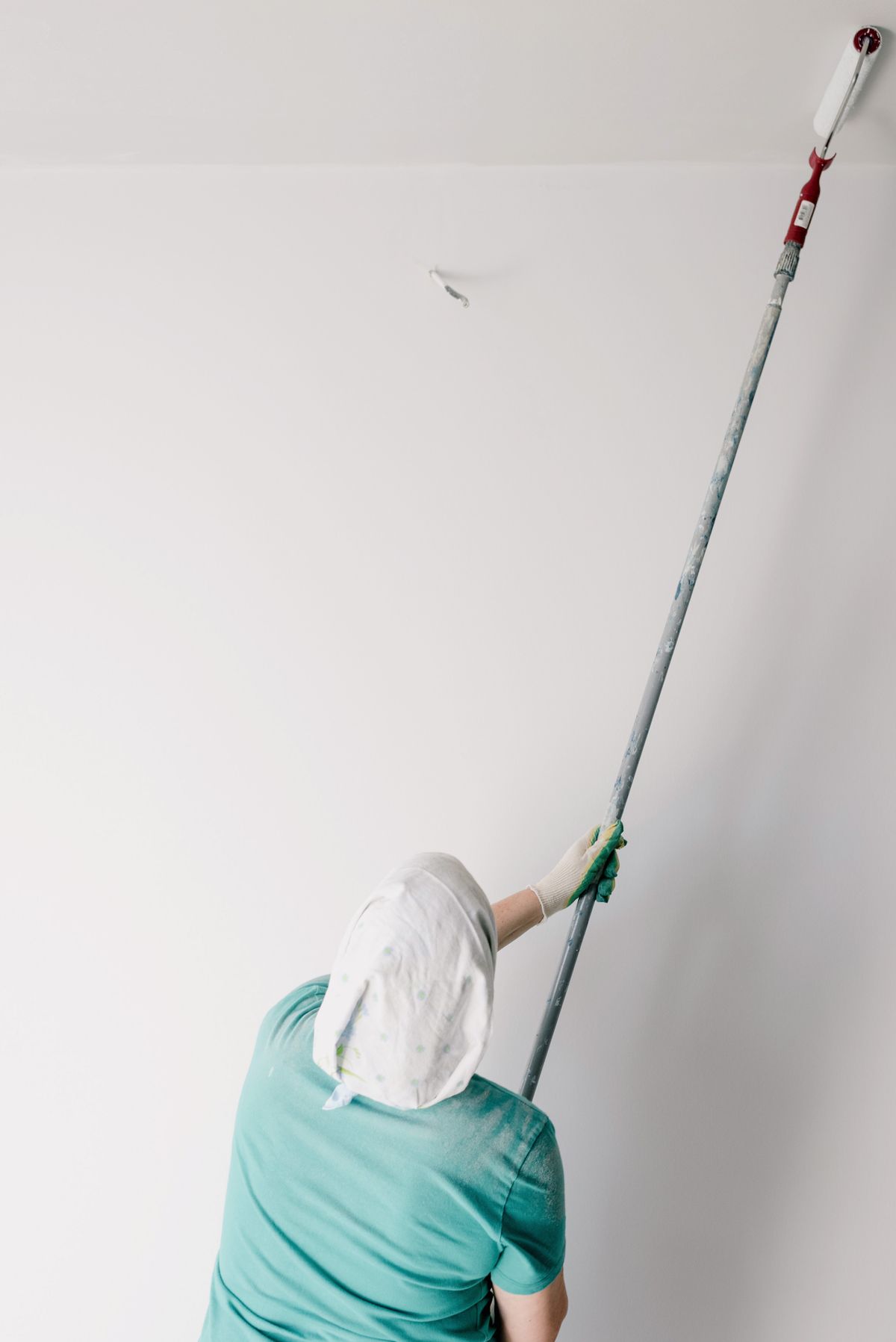
Why Ceilings Deserve Their Own Painter
Walls are easy company: you look at them straight on, in flattering light, past furniture and art. Ceilings get viewed at a raking angle under whatever the window throws at them — and in Lubbock that means long evening sun that turns the smallest roller lap into a stripe you'll see from the recliner forever. Ceiling painting is a technique trade: keeping a wet edge across a big plane, loading the roller so coverage stays even overhead, and choosing a genuinely flat sheen that scatters our hard light instead of spotlighting flaws.
It's also the step that makes every other ceiling project real. Fresh texture reads unfinished until it's painted; a repair is only invisible after the whole plane gets a uniform coat; and a popcorn removal ends, properly, with primer and two finish coats — not a shrug and a primed gray ceiling.
What a Lubbock Ceiling Repaint Fixes
The dust-storm dinge
Years of haboob seasons leave a fine film that dulls ceilings a shade at a time — nobody notices until a fresh white patch appears next to the old finish. A repaint resets the whole surface to actually-white.
Water rings and rust spots
Old stains from hail leaks and cooler drips bleed through standard paint indefinitely. The fix is a dedicated stain-sealing primer under the finish coats — skip it and the ring returns like a tide line.
Yellowing and smoke haze
Decades of kitchen aerosols, candles, fireplaces, and past smokers amber a ceiling so gradually the room just feels dim. Sealing primer plus flat white recovers more brightness than most lighting upgrades.
Sheen patchwork
Touch-ups with the wrong sheen or a mismatched white leave ghost rectangles overhead. One continuous repaint in a single product ends the patchwork for good.
The Process, Done Properly
Mask like it matters
Fans, registers, smoke detectors, and crown get taped; walls get shielded at the cut line; floors and furniture disappear under drop cloth. Overhead rolling throws fine spray — protection is the difference between a paint job and a cleanup job.
Fix the surface first
Nail pops filled, hairline cracks caulked, stains spot-sealed. Paint magnifies whatever it covers, so minor prep here beats major regret later.
Prime with a purpose
New compound gets drywall primer for even absorption; stains get shellac or oil-based blockers; deep color changes get a tinted base. Primer choice, more than paint brand, decides how the final coat behaves.
Cut and roll in sequence
Edges are cut in and the field rolled in overlapping rows while the edge is still wet — the discipline that prevents banding. Lubbock's dry air shortens recoat windows, so a practiced rhythm matters more here than in humid climates.
Second coat, then inspection light
Two coats is the standard, not the upsell. The finished plane gets checked under a raking work light — the same test your west window will run every evening — and any thin spot gets hit before the masking comes down, because touch-ups after cleanup never blend as well.

Flat White, or Something Braver?
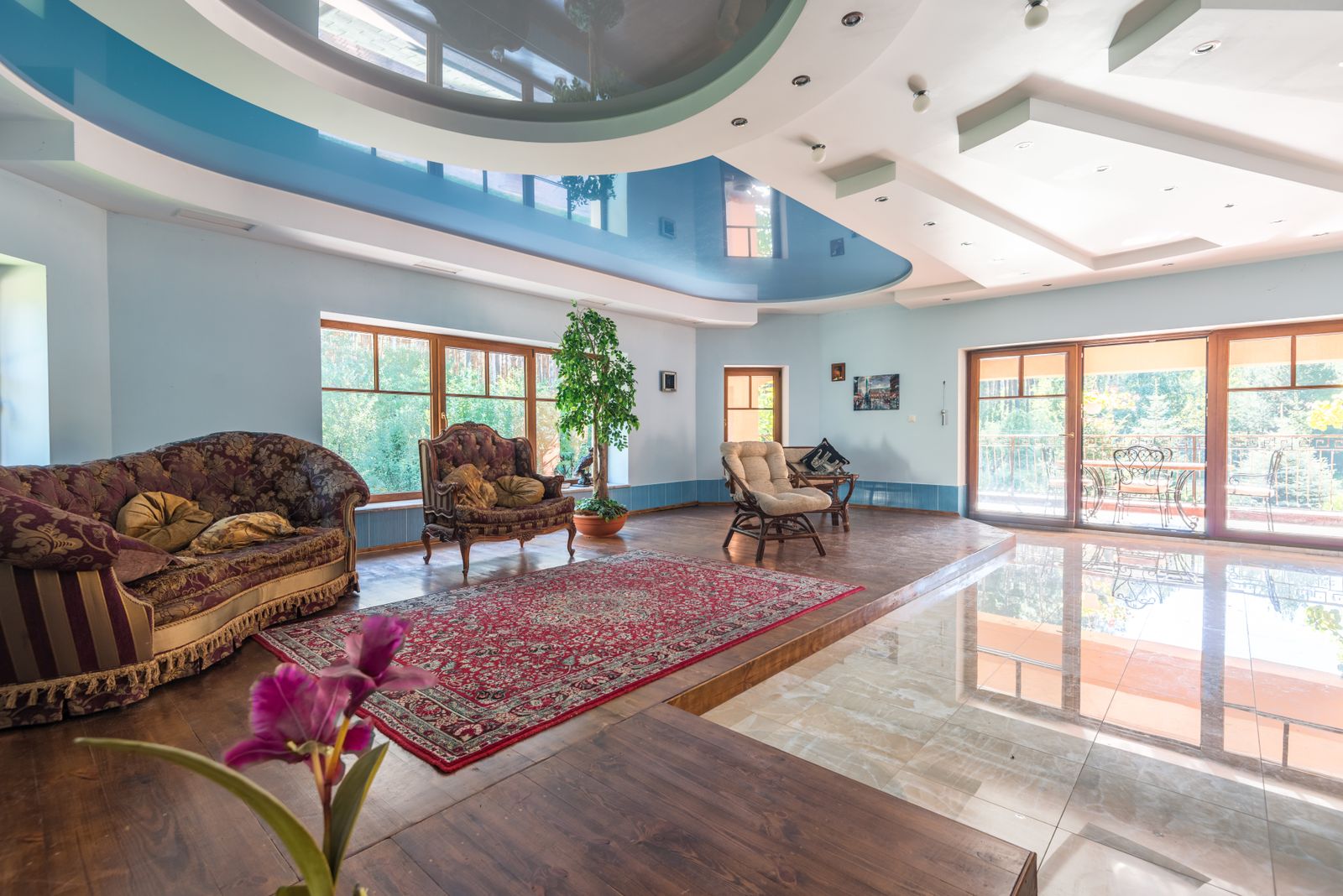
Ninety percent of Lubbock ceilings should be flat white, and there's no shame in it: flat sheen hides texture transitions and roller history, and white bounces the most daylight into rooms that spend summer behind drawn blinds. But “white” is a family, not a color — warm whites calm the orange cast of evening sun and wood floors, cooler whites suit gray-toned modern repaints. And color has its place: a deepened version of the wall color softens tall rooms, and dark ceilings can make a media room genuinely better. The pro will talk you out of nothing — just into testing a swatch overhead, where light hits differently than on any wall.
When to Put Ceiling Paint on the Calendar
Three moments earn the project. Before listing a house: agents will tell you buyers can't name what's different about a freshly painted ceiling, they just call the house “well kept,” and it's among the cheapest whole-home impressions money buys. After the spring blow season: if this year's dust storms were the kind that make the evening news, ceilings near frequently opened doors and drafty windows took a film you'll see once one room gets repainted. And alongside any wall repaint: painters already have the room masked, so declining the ceiling coat usually means paying a second setup within a few years anyway. If the ceilings were scraped and primed as part of a removal, don't wait at all — primer left bare for months collects dust that has to be cleaned before finish coats will bond well.
What arrives in the written quote is deliberately boring: surface prep and stain sealing listed by room, primer and paint products named, number of coats stated, masking and cleanup included, and tall or vaulted areas called out separately. Boring quotes are how you compare bids fairly — and how you avoid the mystery line item after the furniture is already draped.
A Word About Painting Over Popcorn
Every so often the cheapest path looks like rolling fresh white over the popcorn and moving on. Sometimes that's fine — sound, never-painted texture in good condition can be spray-painted (rolling tends to pull chunks loose) and buys the room a few brighter years. But go in with clear eyes: paint adds weight to a fifty-year-old finish, seals it against the water-soak method that makes future removal cheap, and does nothing about the dust-catching profile. If your long-term plan involves ever losing the texture, painting it first raises that future price. And if the house predates the early '90s, the test-first rule applies to spraying paint at it, too — a clean lab result should come before any work that disturbs the surface. It's your ceiling and your budget; you'll just get the trade-offs stated plainly before you spend.
Ceiling Painting FAQs
What does ceiling painting cost in Lubbock?
As part of a removal or retexture project, finish paint typically adds well under a dollar per square foot because masking and priming are already done. As a standalone job, whole rooms usually quote in the low hundreds each, with stain sealing, tall ceilings, and furniture handling as the main adders. The cost guide has fuller numbers.
Can you match my existing ceiling white for touch-ups?
Matching aged paint is harder than it sounds — the original white has shifted with years of light and dust. Small dabs rarely disappear. The reliable fix is repainting the affected plane corner to corner, which is usually only modestly more expensive than a serious touch-up attempt.
How long does a ceiling repaint take?
A standard room is typically done in a day — mask, prep, prime where needed, two coats — thanks to fast dry times in our climate. Whole-house ceiling repaints commonly run two to three days depending on furniture and stain work.
Do I need special paint for bathrooms or kitchens?
Yes — those ceilings live with steam and grease, so they get moisture-resistant formulations, and sometimes a whisper of sheen for wipeability despite the flat-is-better rule. It's a good example of why product choice is part of the service, not an upcharge mystery.
Will fresh ceiling paint help with allergies or dust?
Paint isn't an air filter, but a smooth, freshly sealed ceiling does shed dust instead of holding it the way chalky old paint and heavy texture do — one reason removal-plus-repaint rooms feel cleaner to sensitive households. Low- and zero-VOC ceiling paints are standard now, so the project itself doesn't have to be a headache either.
Is spraying better than rolling?
In an empty house, spraying is fast and beautifully even; in a furnished one, the masking time usually erases the advantage and rolling wins. Textured ceilings favor spraying; smooth planes take either. The quote will say which method fits your rooms and why.
Finish the Job Overhead
Whether it's the last step of a removal or a standalone brightening, get a free quote for ceiling paint that still looks right at 6 p.m. in July.